
You clean your home regularly.
You vacuum the floors, wipe the counters, clean the bathroom, take out the trash and try to stay on top of everything.
So why can your home still feel like it needs another cleaning?
Sometimes, the problem isn’t how often you clean. It’s what gets overlooked when you’re focused on the areas you can see and reach most easily.
A regular cleaning routine is important for maintaining a home. But some areas require additional attention because they are less visible, harder to reach or simply easy to forget.
The American Cleaning Institute includes tasks such as cleaning mirrors and windows, dusting furniture, cleaning blinds and ceiling fans, and periodically deep cleaning areas such as baseboards and other less-visible surfaces as part of a thorough home cleaning routine.
That’s where a more detailed approach can make a difference.
Here are seven areas that are easy to overlook during routine cleaning.
1. Mirrors, Windows and Glass Surfaces
Glass surfaces can look clean from across the room while still showing fingerprints, water spots, dust and streaks when the light hits them.
Mirrors and windows are specifically included in the American Cleaning Institute’s home cleaning guidance.
The details matter here: edges, corners, frames and areas around the glass can easily receive less attention than the center of the surface.
A quick wipe may improve the appearance. A more thorough cleaning takes the entire surface into consideration.
2. The Bathroom Beyond the Toilet and Sink
The toilet and sink usually make the cleaning list. But they’re not the only parts of the bathroom that need attention.
Mirrors, counters, faucets, shower and tub surfaces, handles and other frequently touched fixtures can also collect dirt and buildup.
The American Cleaning Institute recommends regular cleaning of bathroom surfaces including sinks, counters, mirrors and toilets, along with other routine bathroom maintenance.
This is one reason a bathroom can look clean at first glance but still feel like it needs more attention.
3. Furniture and the Surfaces Around It
Dust doesn’t only settle on the floor.
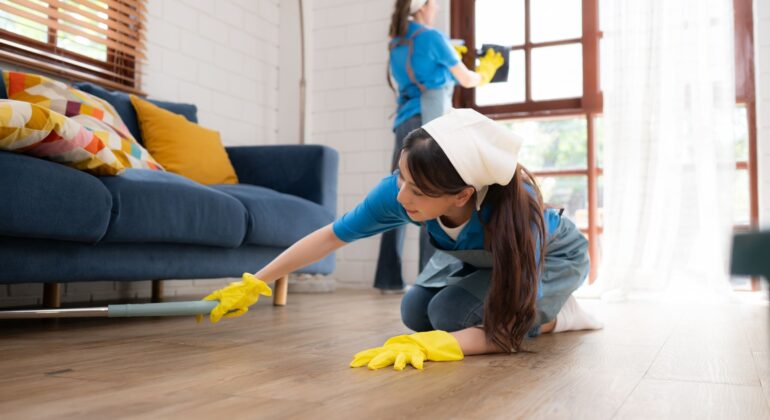
Shelves, tables, furniture and decorative surfaces can collect dust and debris over time. Areas around, behind and underneath furniture can be even easier to miss.
ACI recommends regularly dusting furniture and includes deeper cleaning of areas such as upholstery, rugs and other less frequently addressed surfaces in its home-cleaning guidance.
If certain surfaces have been pushed to the bottom of your cleaning list for months, they’re probably contributing to that feeling that the house is clean—but not quite finished.
4. Floors Beyond the Middle of the Room
Vacuuming and mopping are essential parts of routine cleaning. But the floor isn’t only the open space in the middle of the room.
Think about:
- Entryways
- Hallways
- Areas around furniture
- Corners
- Edges
- High-traffic areas
ACI recommends regular vacuuming, sweeping and mopping, with particular attention to high-traffic areas.
These areas can collect dirt faster than less-used spaces, while edges and corners can be easier to miss during a quick cleaning.
5. Baseboards, Corners and Edges
Baseboards rarely get the same attention as countertops or floors.
They’re low, easy to overlook and often require extra time to clean properly. The same is true of corners and edges where dust and debris can accumulate.
ACI’s guidance includes baseboards, corners and ceiling fans among areas that may be addressed during deeper or less frequent cleaning.
You may not notice each one individually.
But together, these small details can affect how finished and maintained an entire room feels.
6. Behind and Under Everyday Items
Some of the easiest areas to forget are the ones you don’t immediately see.
Under furniture.
Behind objects.
Under cushions.
Behind or around appliances.
These areas are inconvenient to reach, so they often disappear from the routine cleaning checklist.
A more detailed cleaning approach means deliberately checking these less-visible spaces instead of stopping once the obvious surfaces look clean.
7. High-Touch Surfaces
Some surfaces deserve regular attention because people interact with them constantly—even when they don’t look dirty.
Think about:
- Doorknobs
- Light switches
- Cabinet and drawer handles
- Faucet handles
- Countertops
- Handrails
- Frequently used fixtures and controls
The CDC specifically recommends regularly cleaning high-touch surfaces such as light switches, doorknobs and countertops.
It’s also important to understand that cleaning, sanitizing and disinfecting are not the same thing.
Cleaning removes dirt, impurities and most germs from surfaces. Sanitizing and disinfecting are separate processes used in specific circumstances. The CDC recommends cleaning surfaces before sanitizing or disinfecting them when those additional steps are appropriate.
Cleaning Is About More Than What You See
A home can be cleaned regularly and still have areas that need additional attention.
That’s why a more detailed cleaning